When features scale faster than understanding: building products people actually use across screens and devices
.jpeg)
.svg)
6 minutes

Most companies implement features. Very few scale what makes those features actually used.
If you’re leading a product, you’ve probably felt it:
- acquisition grows, but activation stalls
- onboarding gets heavier
- support costs creep up
- churn rises as your product ecosystem expands
That’s rarely a “feature problem.” It’s often a usability problem.
Because your users no longer live in a single interface. They move through a connected environment of SaaS screens, mobile apps, devices, signals, and real‑world contexts.
Digital isn’t a destination anymore. It’s a layer embedded in life.
When usability is missing, confusion scales faster than your roadmap.
Usability, explained for leaders
Usability is the speed at which someone reaches value, without friction.
If a user needs a tutorial, a support ticket, or three attempts to succeed, usability is broken. Not because your teams aren’t talented, but because the product wasn't shaped around real conditions.
A classic UX definition (from Nielsen Norman Group) speaks about effectiveness, efficiency, and satisfaction. Useful framing… but for leaders, the translation is straightforward:
Usability is how reliably your product delivers value at scale.
The digital + physical merge (and why it changes everything)
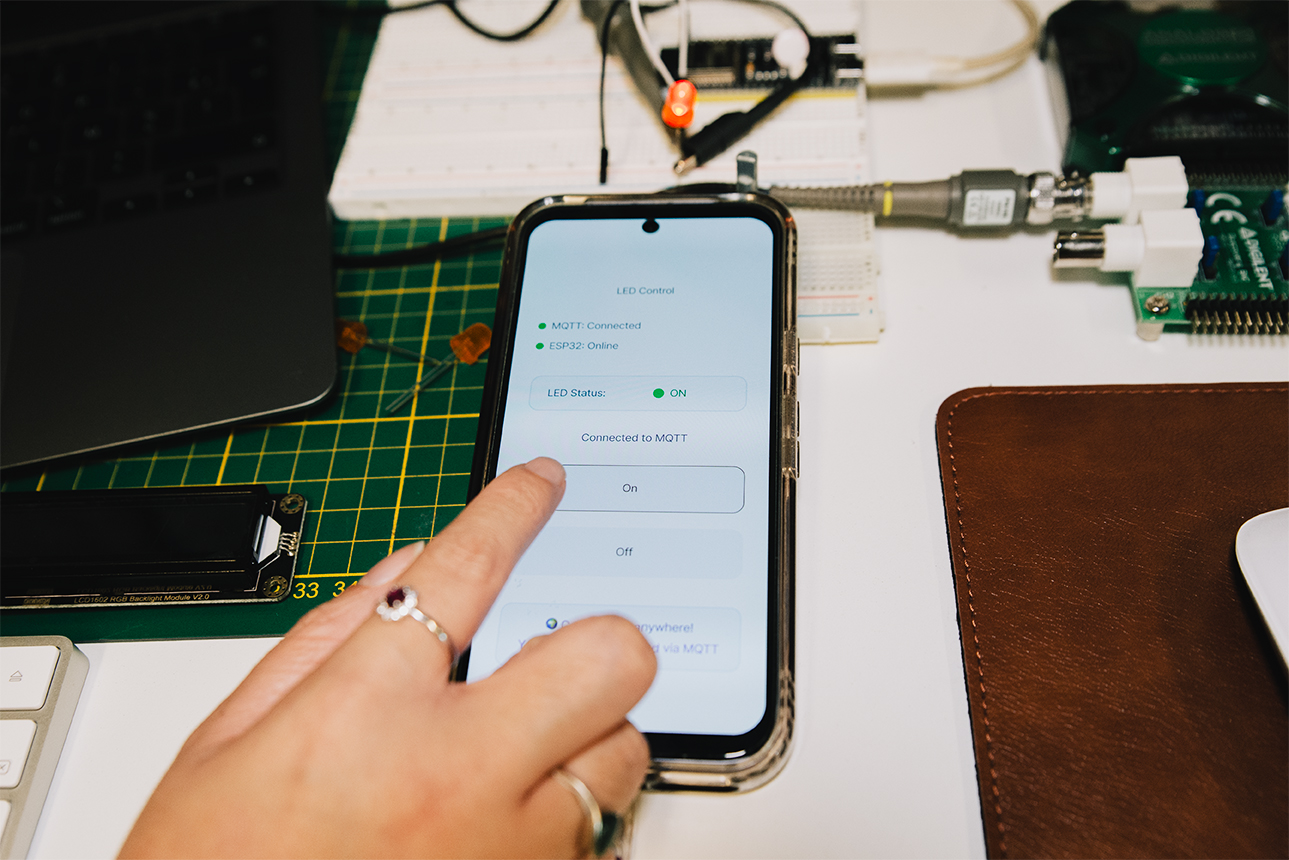
A few years ago, a product was mostly “an app” or “a platform”. Today, products are ecosystems:
- an app that controls a device
- a device that reacts to a space
- a space that triggers data
- data that changes the app
As AI accelerates decisions and connected technologies multiply, the boundary between tangible and digital experiences keeps getting thinner.
The same challenge applies whether you ship SaaS, apps, or connected products: people experience one ecosystem, not your internal roadmap.
This is exciting. And also risky. Because every new surface adds a new context, a new mental model, and a new moment where usability can break.
Functionality ≠ usability (and why it compounds with scale)
Functionality answers: ”Can the system do it?”
Usability answers: ”Can a human do it easily, consistently, and with confidence?”
Most organisations are rewarded for shipping features. But in connected ecosystems, each feature introduces:
- another surface to learn
- another transition to understand
- another place where attention can be lost
At scale, usability debt compounds. A small friction in one touchpoint becomes churn, support load, training time, and brand damage when multiplied by thousands of users.
In other words: you can’t out‑feature a usability problem.
Everyday usability failures (the ones you’ve lived too)
Usability is not a niche UX concept. It is the difference between smooth days and exhausting ones.
And the fastest way to understand, is to look at the moments everyone recognizes… those tiny frictions that make you think: “oh yeah, I get it”
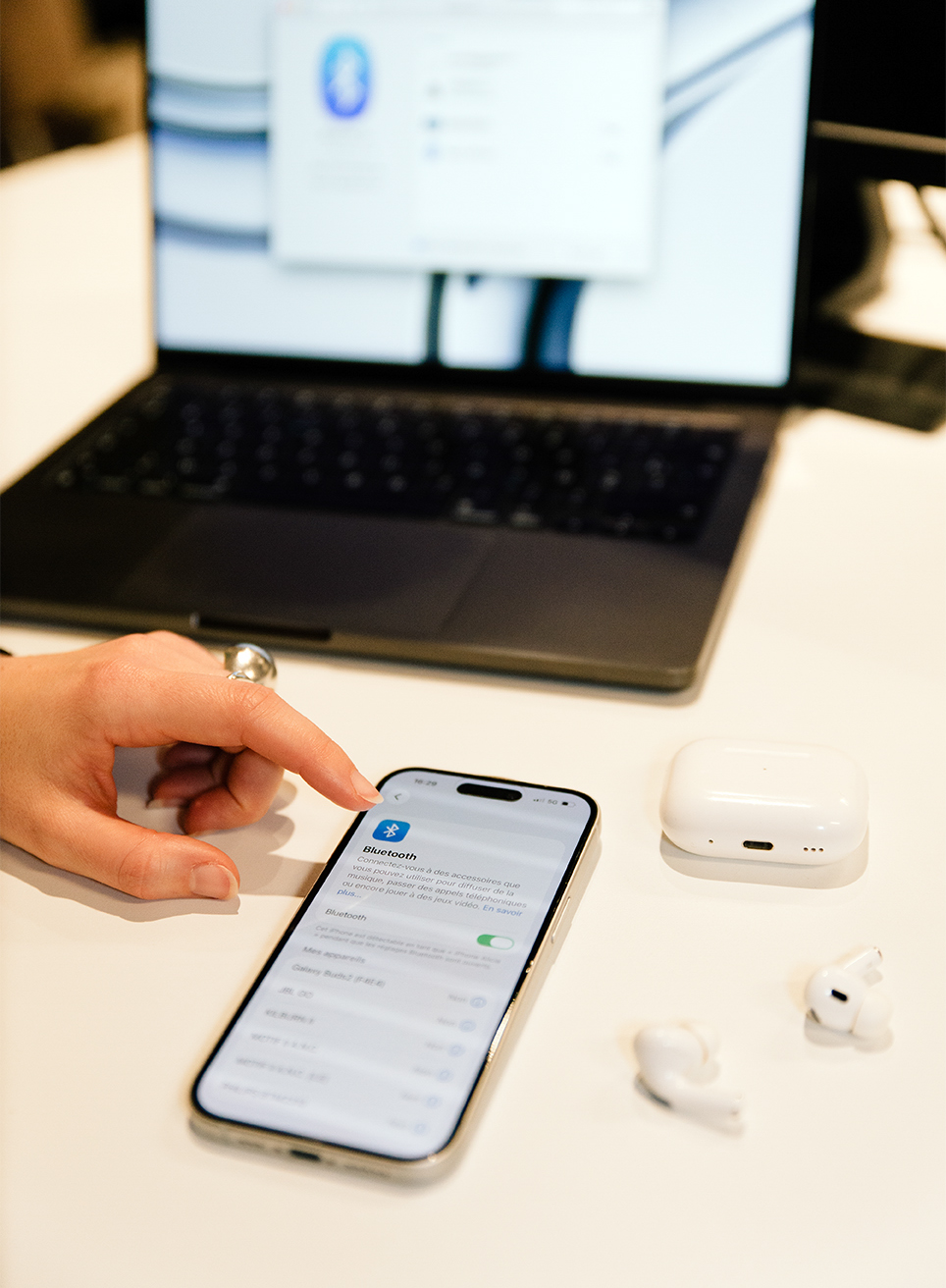
The « Bluetooth dance »
You open your laptop.
Your earbuds connect to your phone instead.
You disconnect, reconnect, restart, guess.
The system works. But the path to success is fragile.
Fragile paths reduce activation and increase support. They also make your product feel unreliable, even when it isn’t.
The vending machine moment
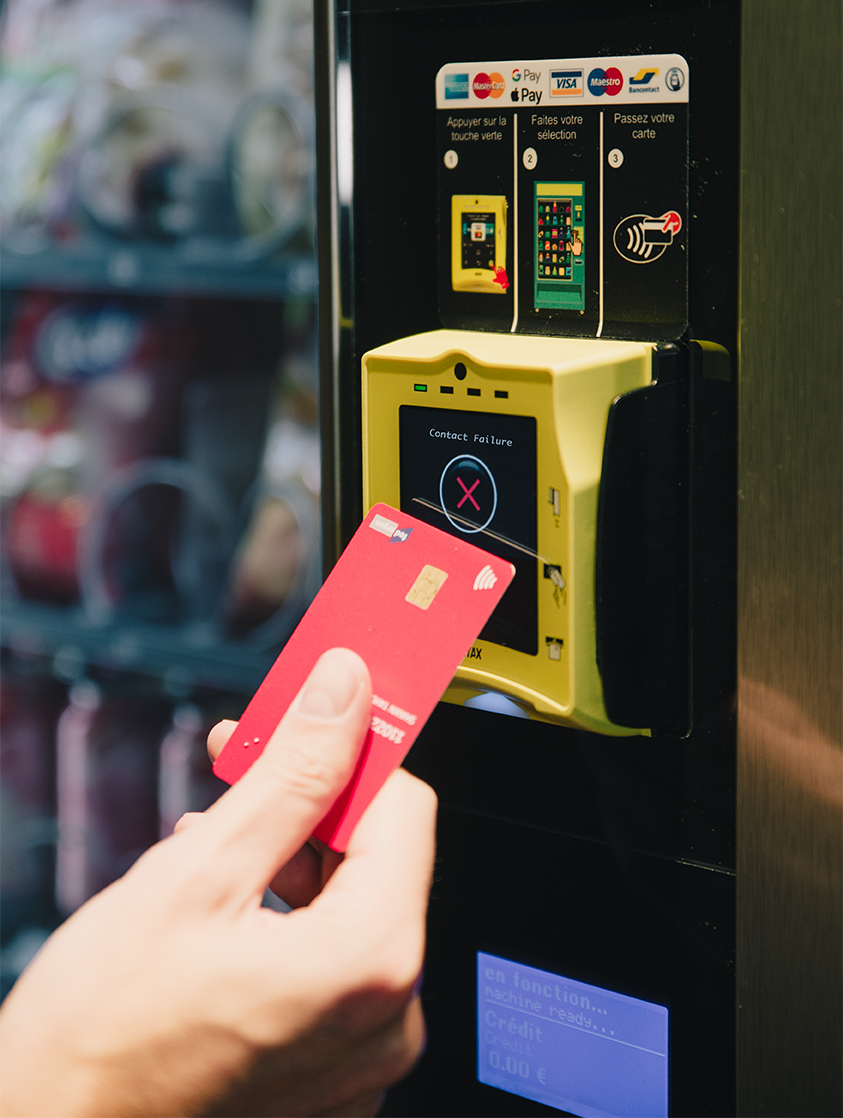
You stand in front of a vending machine.
You want a bottle of water.
There are four payment icons, a QR code, and a tiny screen cycling through menus.
You don’t even know if you’re supposed to choose the product code before paying, or after.
You try contactless. Nothing.
You try the app. You need to download it.
You try coins. It rejects one.
The machine is functional. The experience is unusable.
When people feel stuck or stupid, they quit and they don’t retry later. That same emotion happens inside your product - and it quietly kills adoption.
The meeting room moment
You book a meeting room for 10:00. You show up on time.
The calendar says it’s yours. The door says it’s free.
But there are already people inside.
They booked it too. Or didn’t book it at all. Nobody knows.
You’re stuck in that awkward hallway limbo, trying to sort it out while your meeting starts without you.
The system is functional. The experience is frustrating.
When everyday workflows feel unreliable, people stop trusting the ecosystem. And once trust is gone, adoption follows.
Why usability matters for innovation - for start-ups and scale-ups
Usability is not a finishing touch.
It is a strategic growth lever. It's the critical indicator that determines whether your product drives business results or frustrates your customers.
Adoption and activation
If users can’t reach their first value moment quickly: acquisition investment becomes the cost of churn.
This is where many scale-ups get trapped: marketing performs, product ships, and yet activation plateaus - because usability didn’t scale with feature velocity.
Retention and lifetime value
Usability is what makes a product feel reliable. Reliability drives habits. Habits drive revenue.
When experiences are coherent across touchpoints, customers don’t need to think to succeed. They stay longer because the product feels like part of their life.
Support and operational cost
Every unclear interface becomes a ticket. Every ticket becomes a margin leak.
Fixing usability early is cheaper than maintaining friction forever.
Brand trust and differentiation
In connected worlds, clarity is the differentiator. Not “more smart”.
When your product feels simple in complex environments, people talk about it. That is brand equity you can’t buy with ads.
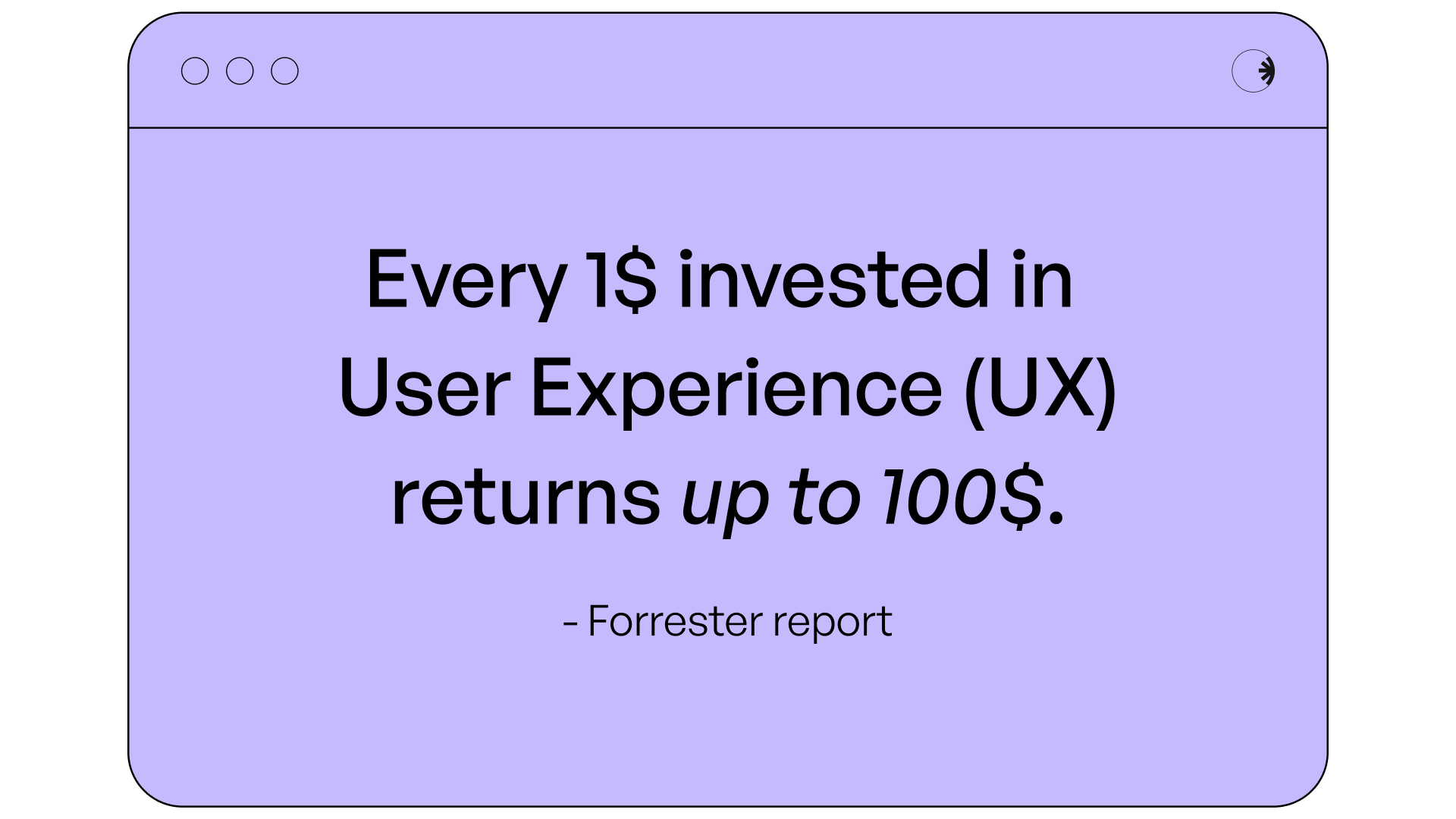
The data is clear: investing in UX is the smartest decision you can make.
Before you scale more features: 3 usability checks leaders can run now
You don’t need to become a UX expert to lead on usability.
But you do need a few sharp checks before you pour more fuel into the roadmap.
Measure the first value moment (and track it like a KPI)
- Define the first value action that proves someone “gets it”
(ex: creating their first project, connecting their first device, completing their first workflow). - Measure time‑to‑first‑value and drop‑off before value on new users.
- Set a target: under 2 minutes for B2C, under 5 minutes for B2B is a good rule of thumb.
- If hard onboarding is unavoidable, add progressive disclosure: show only what’s needed to reach value, postpone the rest.
Think about transitions, not only screens
- Map the full journey: app → device → physical action → back to app.
- For each transition, ask three questions:
- What does the user expect to happen next?
- What feedback confirms it happened?
- What happens if it fails? (and can they recover without help?)
- Stress‑test the journey in real conditions: poor Wi‑Fi, one‑hand usage, noisy environments, low battery, distractions.
- If your ecosystem spans teams (app team, hardware team, ops), assign a single “experience owner” responsible for cross‑surface coherence.
Audit your signal‑to‑noise ratio before adding intelligence
- List every place your product “speaks”
(notifications, banners, empty states, settings, onboarding, device LEDs/sounds). - For each signal, check: Is it actionable? Is it timed right? Does it reduce uncertainty?
- Remove or merge anything that doesn’t answer a real user question.
- Measure cognitive load with a simple test: can a user explain what to do next in one sentence?
If not, you’re shipping noise. - In connected products and AI flows, attention is your scarcest resource... protect it like margin.
How Outsight engineers usability between UX and connected tech

At Outsight, we treat usability as a system property, not a polish step. We don’t see it as a ‘nice-to-have’ layer you add at the end.
We see it as craft: a rigorous, cross‑disciplinary practice where UX, research, and engineering shape the product together from day one. It emerges when design and engineering evolve together.
We’ve spent the last years building complex SaaS platforms, mobile apps used daily, and multi‑touchpoint products across industries. That gives us a clear view of what breaks when products scale: not technology, but comprehension.
Our process is simple in principle, demanding in practice:
- Start in real life
- We observe people in context, not in theory. We look for friction, workarounds, and hidden needs.
- Prototype early, across surfaces
- We test flows before they become features. We prototype the app and the object and the transition between them.
- Build coherent ecosystems
- We align logic, language, feedback, and mental models across every touchpoint.
Because usability is consistency over time.
This is where UX meets connected technology. It is also where most connected products fail today.
Conclusion
Connected technologies are multiplying.
AI is reshaping decision‑making.
Interfaces are dissolving into environments.
In that world, usability is the bridge that keeps technology human. It is what turns ecosystems into experiences. For scale-ups, this ‘space between’ is where growth either accelerates or breaks.
The next competitive edge won’t come from smarter products. It will come from usable connected experiences. If you’re scaling a SaaS, an app, or a connected ecosystem, the question isn’t "what else can we build?" But "how effortlessly can people succeed with what we already built?"
We’re exploring this frontier deeply right now - across platforms, devices, and the moments in between. To take this mission further, Outsight is evolving. We’re carving out a dedicated space for experimentation - a place to prototype, test, break, and rebuild connected experiences until they feel obvious.
Imagine a lab where designers, engineers, and product teams collaborate around one goal: making scalable technology that still feels human.
We’ll share more about what we’re building there soon.
🖇️ Follow our journey as we merge Usability and Internet of Things (IoT) at the studio - here, on LinkedIn and on Instagram.


cover.png)


